PHYLLIS RASHLIEGH
THE LAST GANSEY KNITTER IN ST IVES
Beneath Porthmeor Studios in St Ives, where artists now create overlooking the beach, the old fishermen's workshops are still in use. I was filming my master's project there one spring day in 2025, when I met Nathan, a fisherman from the village.
What began as a conversation about fishing soon became an introduction to one of Cornwall's last gansey knitters—and to a community whose identity had been stitched into its clothing for generations.
Surrounded by nets, buoys and withy pots, our conversation drifted from materials to people. It became clear fishing was a lot more than just the men who went to sea. Every catch depended on an entire community, where wives made nets, packed pilchards into barrels and knitted the fishermen’s clothing.
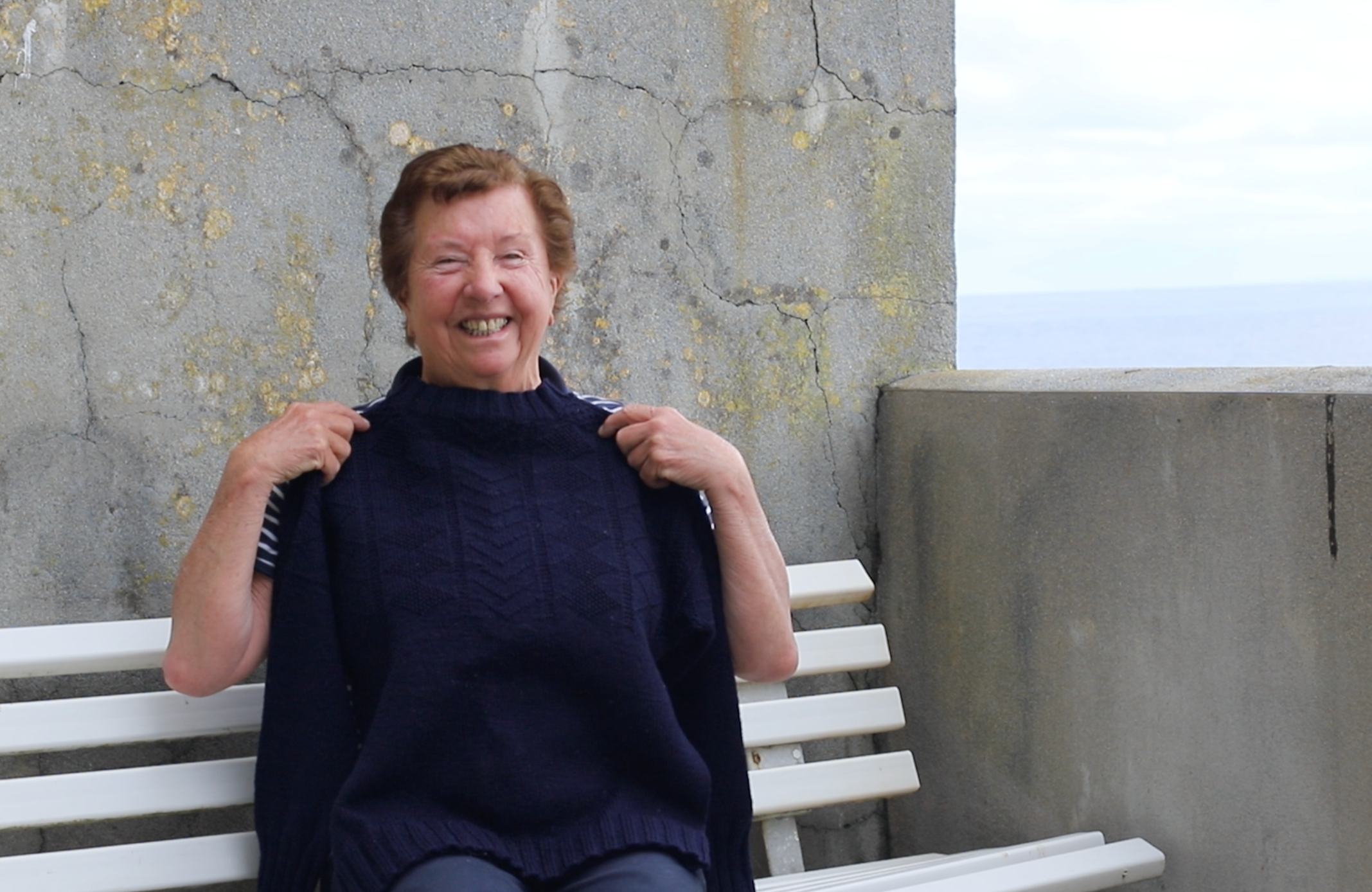
The most recognisable of these garments was the gansey: a tightly knitted woollen jumper designed to repel wind and seawater. More than practical clothing, it was a craft passed from mother to daughter. Nathan explained how they are not worn so much these days, but that there was still a few in town, with his aunty being one of the last gansey knitters in the village.
Following our conversation, he offered to introduce us. As he led me through the narrow, winding, cobbled streets of St Ives to her home, this sense of community was alive and thriving, with everyone we passed greeted as an old friend.
We arrived at Phyllis’ house – appearing simply as a small, slightly crooked cottage from the road. We entered through the old wooden door and were instantly struck with the vibrant blues of the harbour beyond. Like all Cornish cottages, it was dark with low ceilings, emphasising the view even more.
Phyllis seemed pleasantly surprised at her nephew’s arrival, and although was expecting some fish, was happy to instead receive a visitor who was keen for a good yarn. She made a cuppa, we sat on her balcony, and she began talking about the history, construction and significance of the jumpers.
“Well, this is what it is…” She began, proudly showing off her own knitted gansey “…all knitted in one piece.”
She held up the hem “You start by knitting on four needles like a big sock” and went on to explain how the chest pieces are worked separately and then joined at the shoulders. They also feature a diamond shaped gusset under each arm for ease of movement.
The construction reflected a resourceful culture where nothing was wasted.
Holding up the sleeves she explained how they are also knitted in the round, from shoulder to cuff, “Knitting it that way, had a practical reason.” She said,
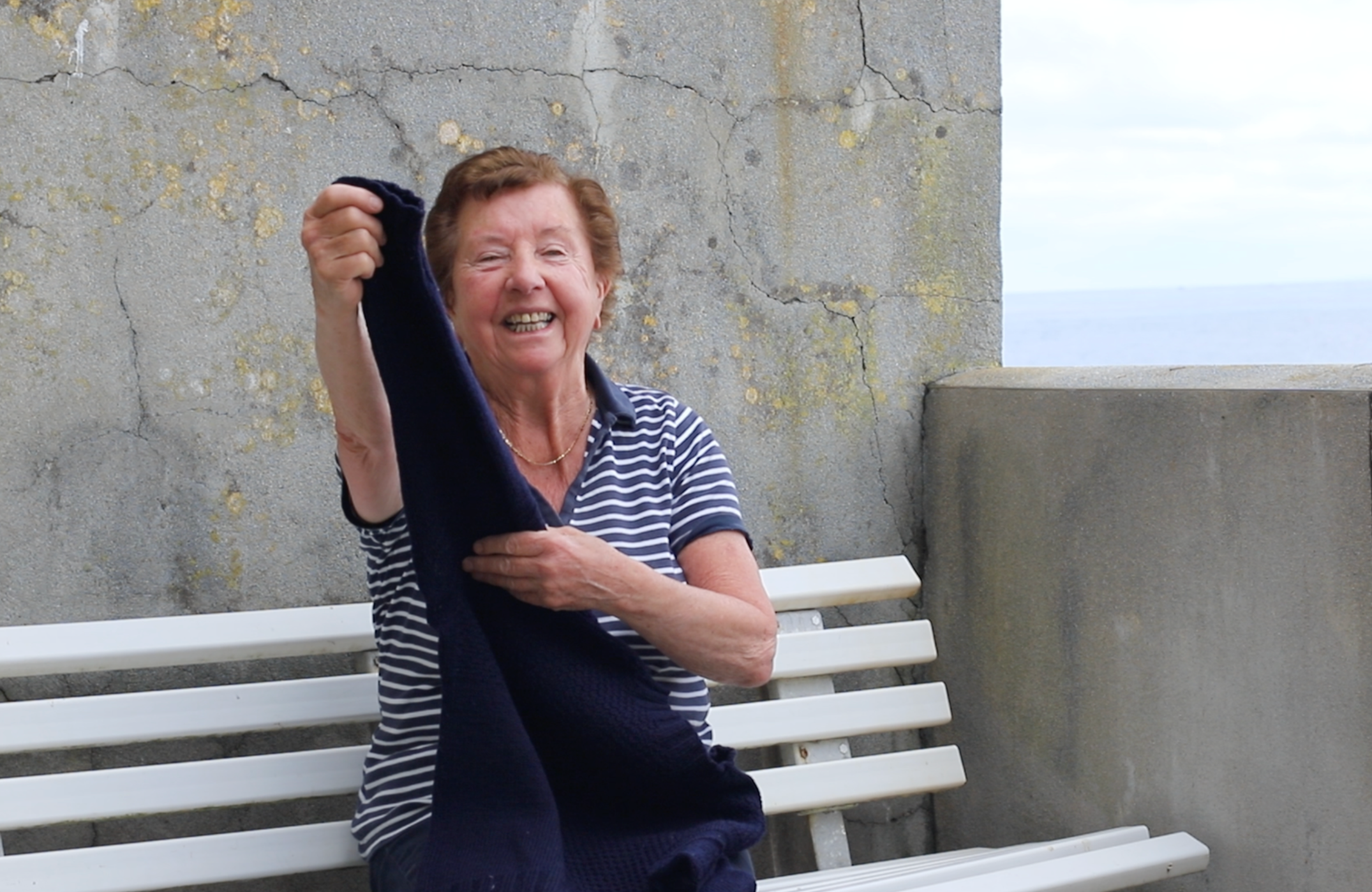
“If the elbows wore out, you could unpick it and knit a new sleeve.”
Unpicking, repairing and re-knitting the jumper enabled it to withstand many more years at sea and increased the garments lifespan significantly.
“…and I don’t think, years ago, they used to wash them very much. Wool doesn’t hold perspiration like synthetic yarn. I think they used to just let them air…They used to joke that if you didn’t wash them, they would be almost waterproof by about a year”
“This one is mine,” she continued, holding up her gansey by the shoulders “it has a pattern on the front, but it doesn’t have a pattern on the back because I was too lazy.”
“Each pattern means something,” She explained, as she pointed to the individual patterns on the chest of the garment.
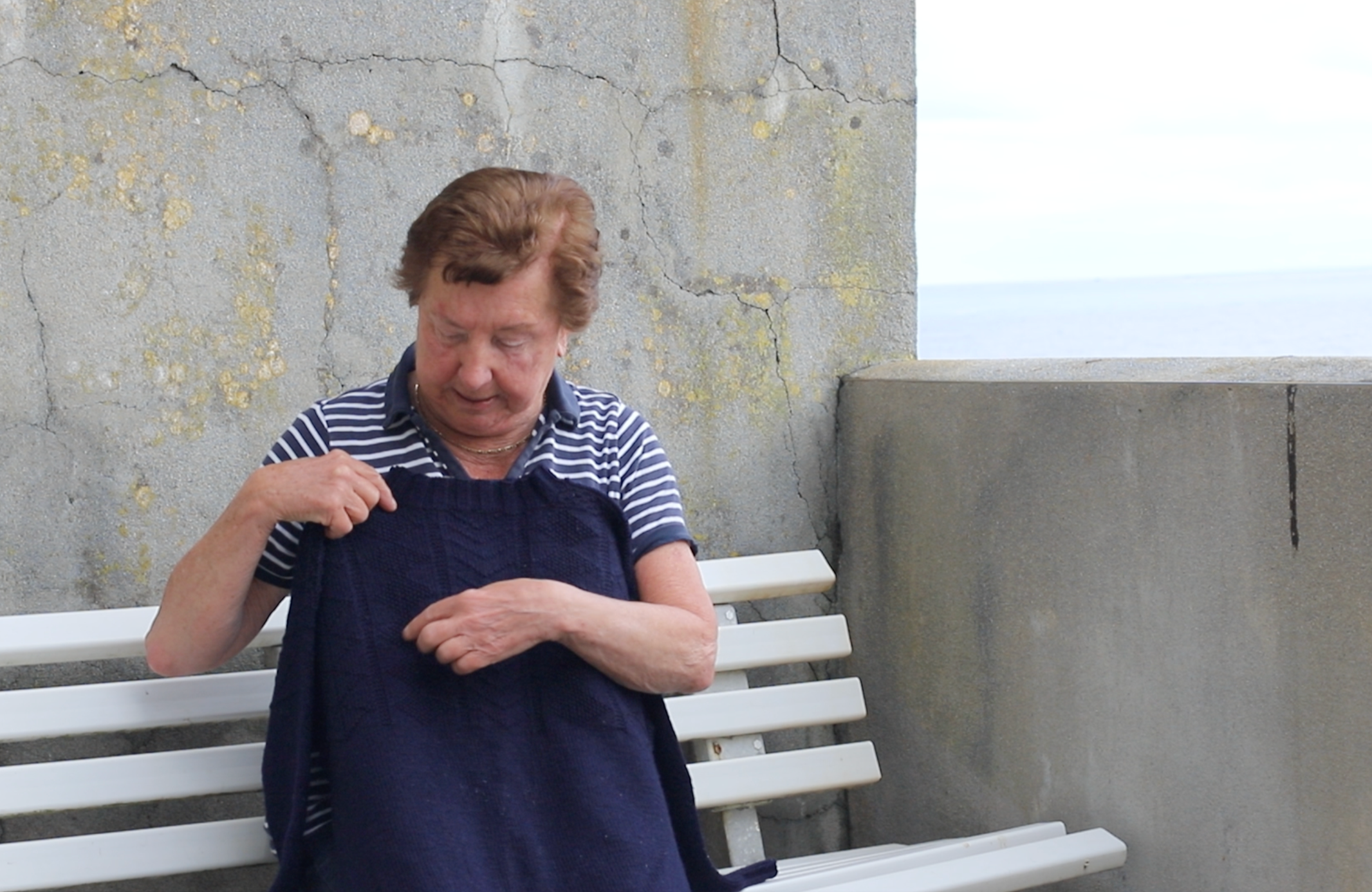
“Diamond nets... chains... ropes... It’s a gruesome tale but each fishing community had its own familiar pattern, so if you found a drowned fishermen at sea, you could return him to his harbour by the jumper he was wearing.”
Whether or not this tale is true, as it is often debated amongst locals who argue fishermen were too superstitious to wear anything related to death, the patterns nevertheless reveal something about the knitter, with the stitches carrying clues of her harbour and family. The wearers initials were also stitched into the jumper above the trails.
I asked her what role women played in the fishing community, to which she replied
“The women were more important than the men, all the men did was catch the fish”
“Girls as young as 12 would knit, for a living. And I don’t think they used to earn very much… shillings I ‘spect.”
“They used to say the children knit the trails; that’s the bit at the bottom.” She explained as she pointed to the hem of her jumper. “Which is usually knit three, pearl three. Then the mothers would pick up and continue the pattern.”
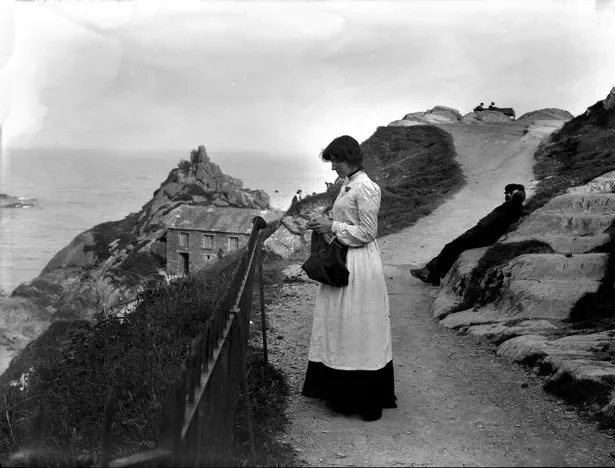
It became apparent this sense of community was woven into every aspect of life here, embedded into their clothing with every stitch.
We spoke about the ganseys for a short while before she started reminiscing about her life in a fishing village. She remembered Nathan as a toddler sitting in a pile of mullet on her balcony, destined to be a fisherman and how the black marks on her wall were from a catch of cuttle fish from the week before.
As I left Phyllis’s cottage and made my way back through the winding streets of St Ives, I reflected on how the afternoon had begun with a conversation about the Cornish fishing industry and had finished with a meaningful insight into a Cornish community. Fishing and indeed gansey knitting has shaped life in this village for centuries. Phyllis is among the few still practicing in the whole of Cornwall, and perhaps the last gansey knitter in St Ives.
Technical fabrics and synthetic outdoor wear have not only challenged this craft, but its culture and community equally. Without people like Phyllis sharing their stories and skills, the knowledge risks disappearing altogether.
That afternoon I kept thinking about the sleeves of Phyllis's gansey. When they wore through, they weren't discarded; they were carefully unpicked, repaired and knitted again. The garment endured because the community took the time to mend it rather than replace it.
Like a gansey knitted slowly row after row, this tradition has been built over generations, year after year. Perhaps we should take a lesson from a culture built on repair. The whole jumper doesn’t need replacing. Perhaps our craft traditions simply need to be restitched, and another row added, enabling the craft to endure the weathering and live on for years to come.