AUSTRALIAN SEAWEED ARTIST
The first thing I was expecting to notice when I stepped into Jennifer Turpin’s Studio in Chippendale was seaweed’s unmistakeable smell.
But it wasn’t.
It was an energy.
Dried, hanging seaweed burst out of its once confined corner, as though still dancing and swaying with the tide, blurring the lines between artist studio and seaweed forest.
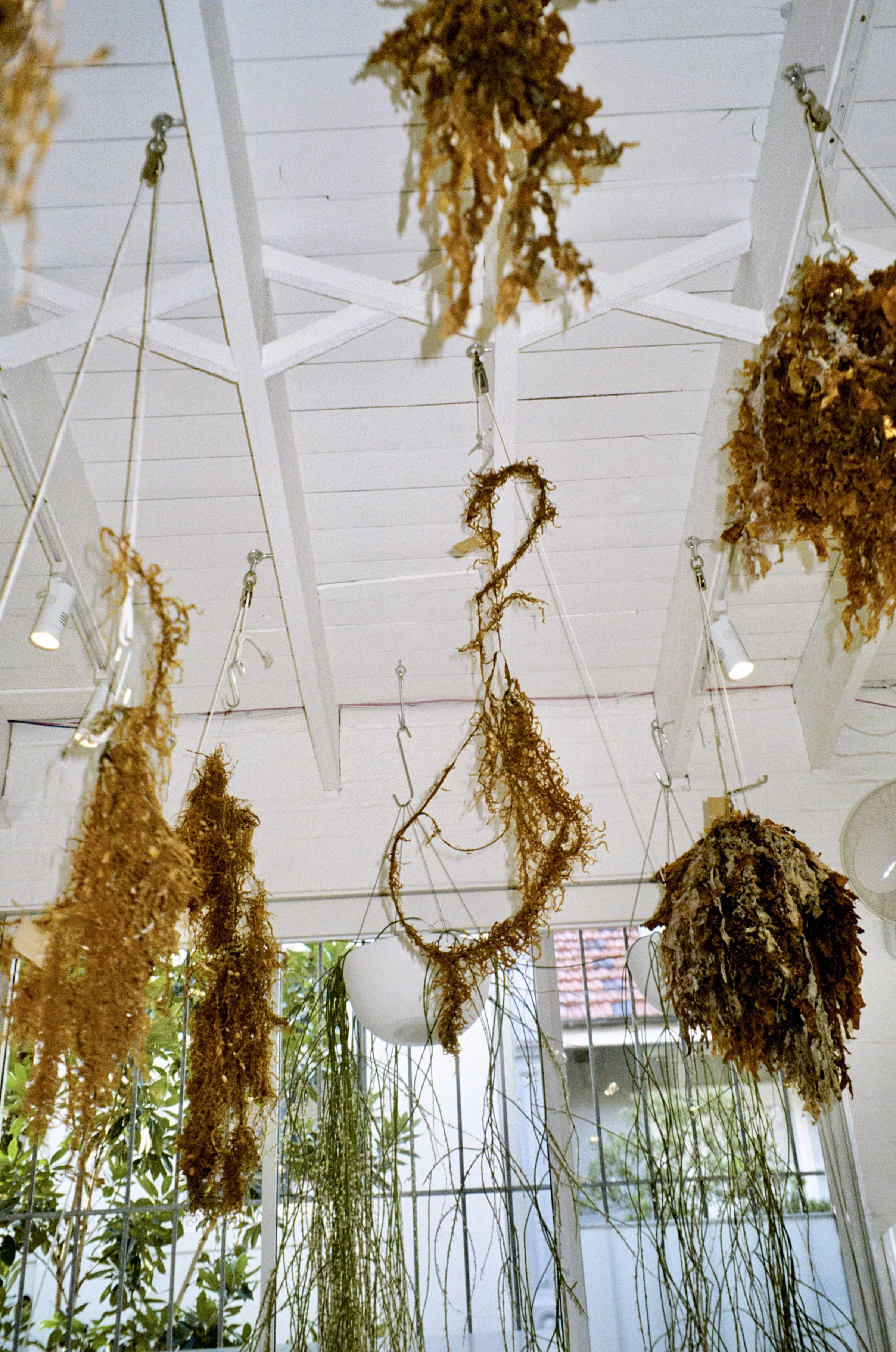
Dried seaweed hanging from the ceilings of Turpin’s studio in Chippendale.
The high ceilings of her light filled space were brimming with seaweed, radiating this energy Turpin captures in all her pieces.
Aiming to engage with people on a visceral level, she explains,
“That’s why work a lot with movement. Most of my artworks move in one way or another in response to natures elemental energies, such as the wind or the tide”
One of her latest projects titled Seaweed Arboretum, an installation piece for Manly Art Gallery and Museum made together with her long time artist collaborator Michaelie Crawford, was no exception. Seaweed hung from the ceiling, enveloping the room in an underwater seaweed canopy, she spoke of liquifying the space by remembering seaweeds’ living state and highlighting the beauty of seaweed’s natural forms.
To see her exhibited seaweed pressings click here.
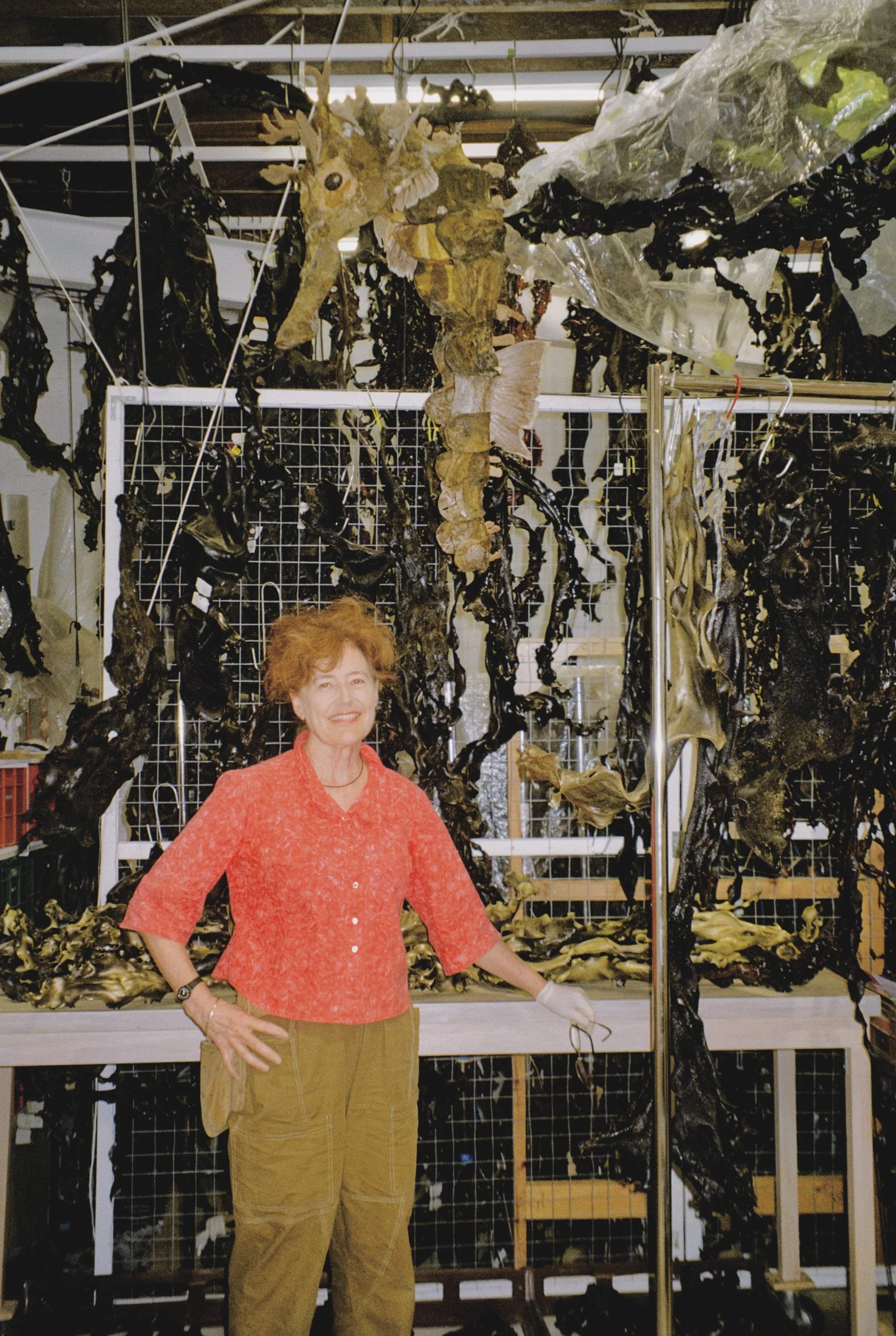
Jennifer Turpin at her Studio, Chippendale, Sydney.
This was captured so beautifully in her studio, where we sat and discussed her other work over a cup of jasmine tea.
Fundamentally for Turpin, art is a tool for the environment. She finds by encapsulating natures energy, she can connect with people empathetically. She explains how the body responds to the movement, creating a visceral reaction within the viewer.
With this empathy she aims to ignite hope.
“Hope is a really important thing. It gives you an agenda and something to do. If you’re pessimistic you do nothing because you think nothing is going to make a change. If you’re too optimistic you also do nothing, because you think everything is going to be alright. If you’ve got hope that gives you the chance to do something”
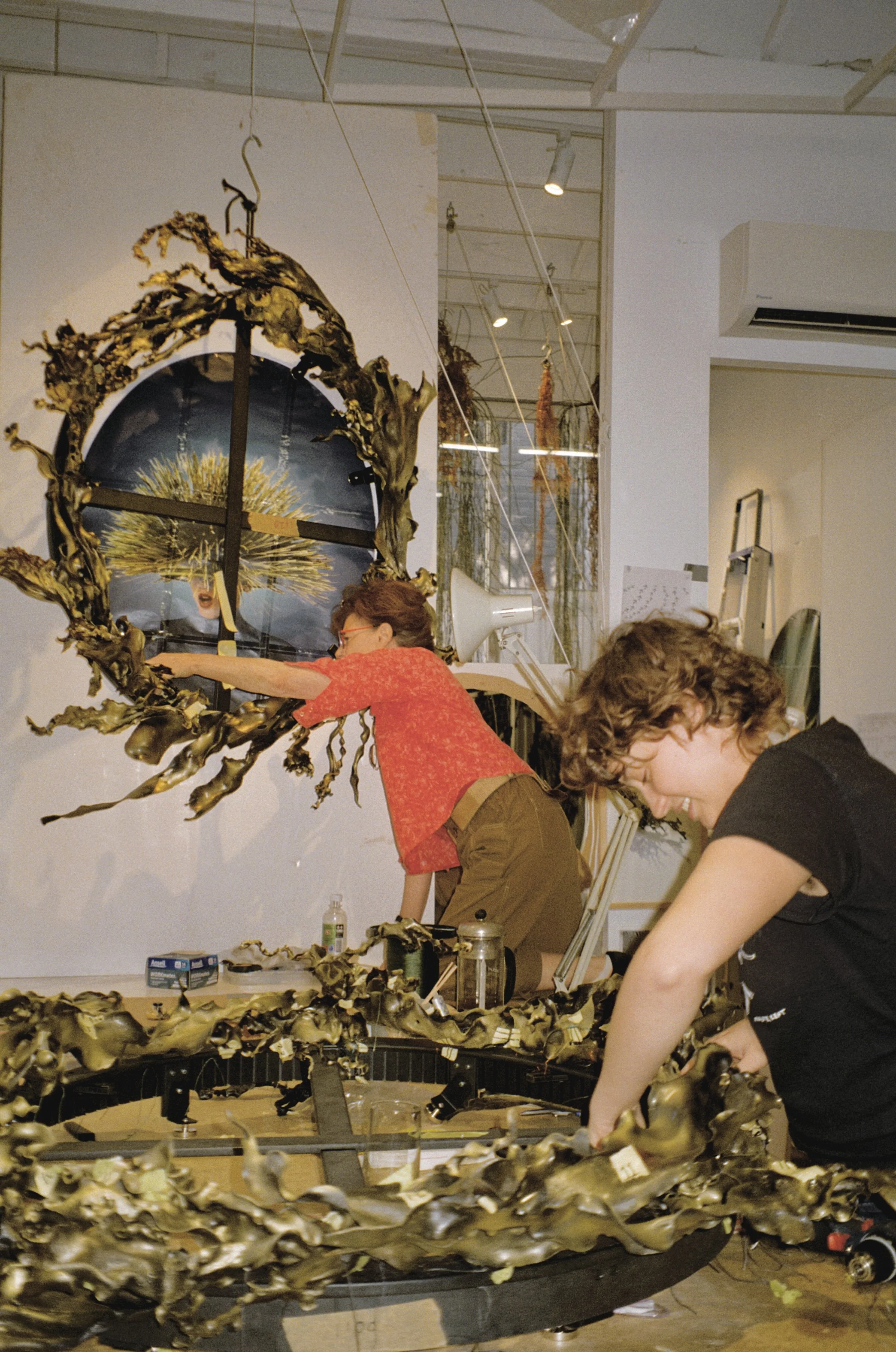
Jennifer Turpin and goddaughter artist Eve Erickson preparing for their exhibition Sea Kin .
“It’s always about igniting and fostering a sense of what can be done. It’s always fundamentally about enabling people to observe and be aware of and understand parts of nature that we would normally take for granted. It could just be the tide”
Turpin explained how she developed a sense of the ocean from an early age, like all Australians going to the beach as a youngster.
She has created artworks responsively with water for the past three decades, even creating a tidal wave and wind responsive artwork Tied to the Tide in 1999 with Michelie Crawford. These earlier works played with buoyancy, tidal energy, gravity, surface tension and light refection through water. But it wasn’t until meeting the ocean scientists ten years ago, that this fascination progressed into the state of water’s ocean health, with the need to highlight issues of biodiversity loss and restoration . She and her colleague partnered with marine scientists to provide the ‘Art-meets Science” component of a variety of their marine restoration projects inside and outside Sydney Harbour. In 2021 The Seaweed Arboretum art installation at the Manly Art Gallery became host to a 4 week long program of events and talks about seaweed’s vital role in climate and ocean health, the art providing the ‘habitat’ so to speak for a month long ‘Festival of Seaweed’.
Working with Seaweed in these restoration projects triggered further investigation into the mesmerising way seaweed moves in the ocean, due to its buoyancy
“The way the current acts upon seaweed I find endlessly fascinating. It’s a bit like watching a fire”
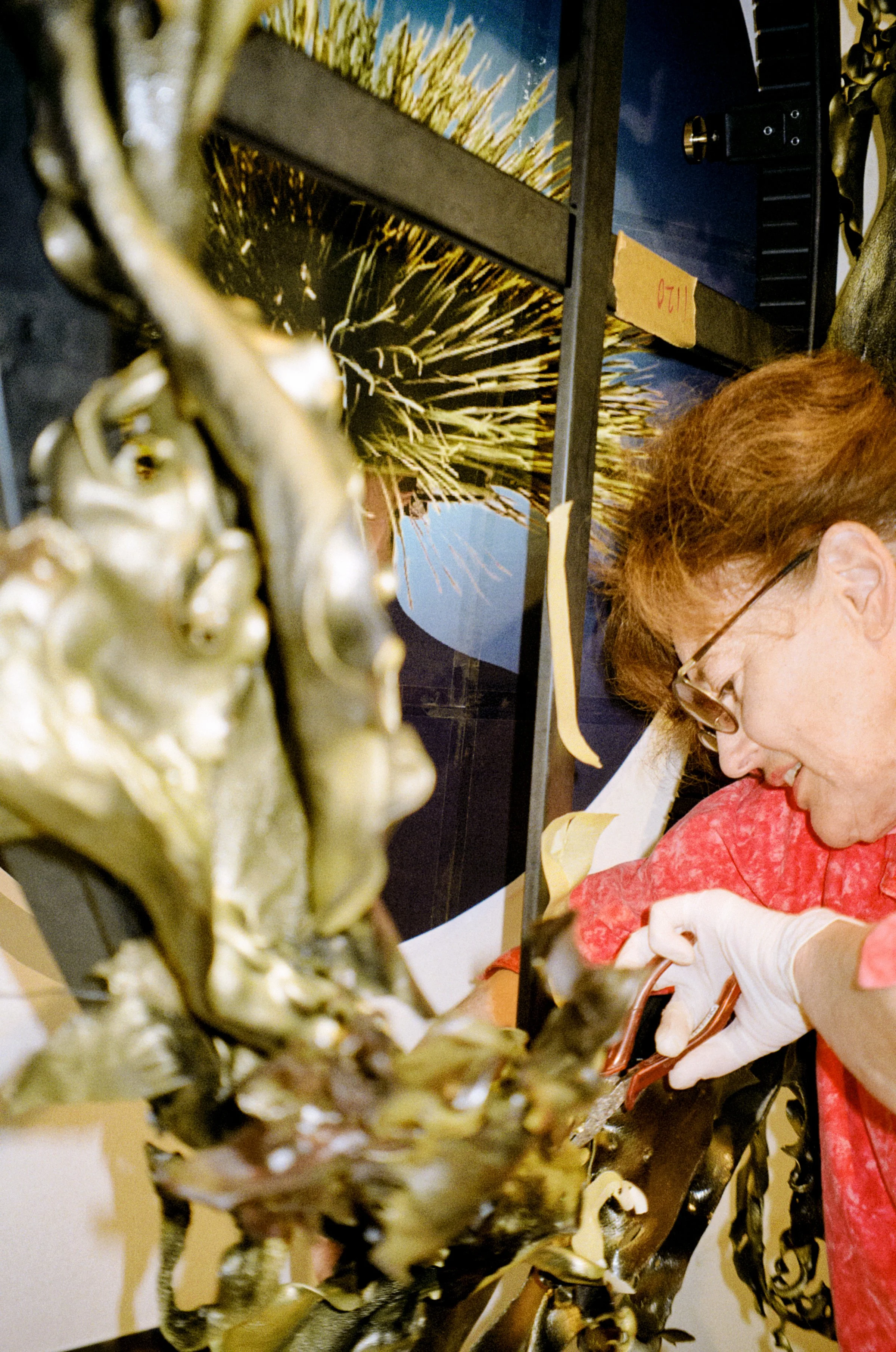
Turpin working on her ornate seaweed frames for exhibition Sea Kin.
With her recent work she aims to make underwater landscapes more visible, enabling the everyday viewer to become equally as fascinated with the dance of seaweed.
It is important to Turpin to keep this liveliness within her installations by moving the macro algae in certain ways whilst drying. She takes her cues from the forms of the individual seaweeds, sympathetically dehydrating them with the same essence of form.
“Some wise old engineer once said there’s no better sculptor than a tree and in some ways he’s right. Nature is magnificent and incredible and every form that is part of nature is intriguing and beautiful, whether it’s a rose petal or a frond of seaweed. I think the more time you spend with individual pieces of seaweed, the more you get to appreciate their natural shape and form. That certainly happened by working so closely with and handling all the seaweed in the studio”
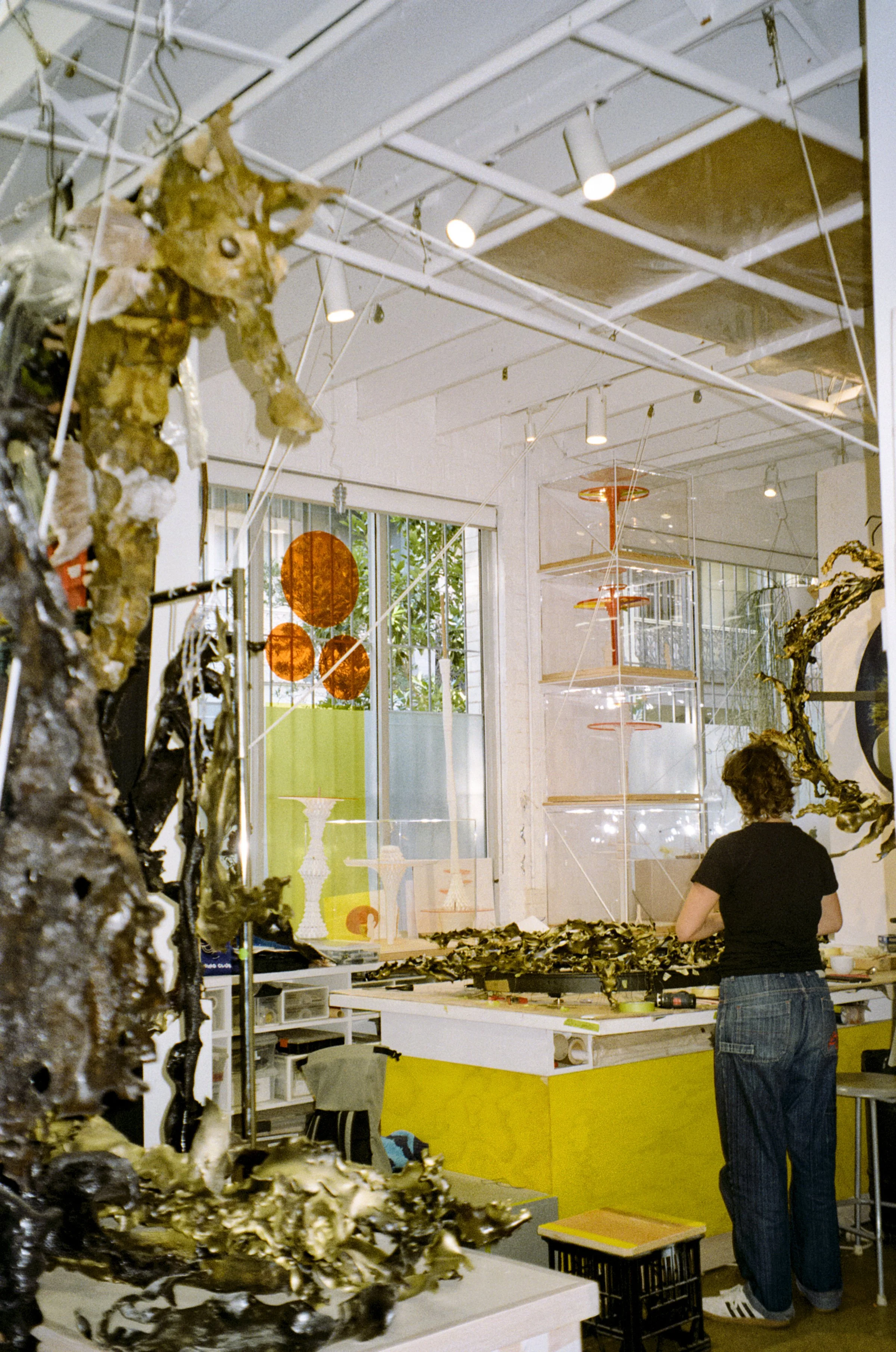
Eve Erickson working on frames for Sea Kin at Turpin’s studio in Chippendale, Sydney.
She noted drying the seaweed was one of the biggest challenges she faces. Whether it’s running aircon to keep it dry, the lacquering process or preserving it so it doesn’t rot. Turpin explained how she is not 100% happy with the process and is continuing to research and find better alternatives. She reflected on the indigenous use of gadiglue, a substance from spinnifex grass used on indigenous bull kelp water carriers, which I found particularly interesting.
All seaweed from Seaweed Arboretum has been repurposed for her next project Sea Kin. Something I thought particularly appropriate as a way of keeping the movement and energy that runs throughout all her pieces alive.
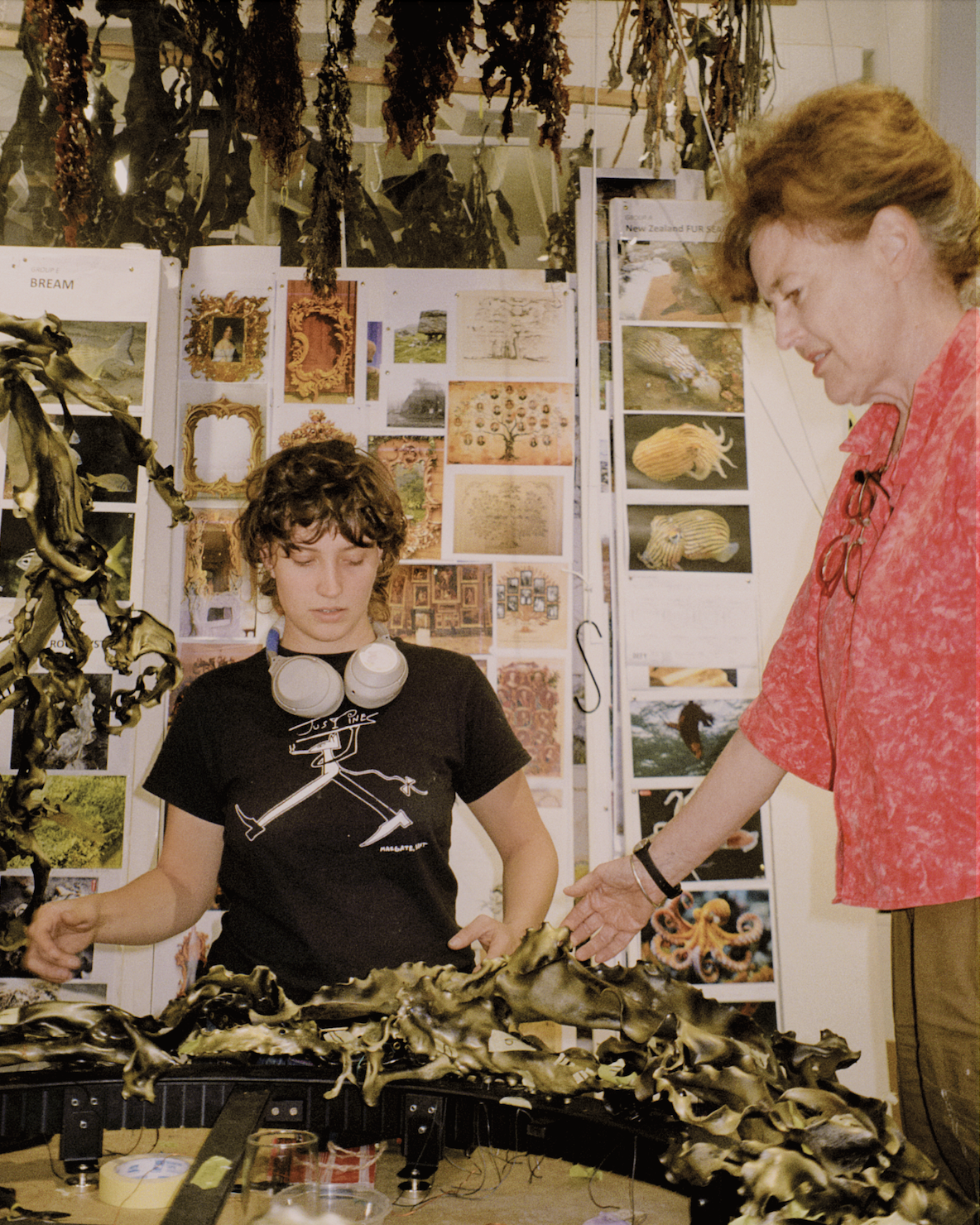
Jennifer and Eve working on Sea Kin at her studio in Chippendale, Sydney.
At the time of visiting her studio, Turpin and her goddaughter artist Eve Erickson were working away in preparation for the opening of a new exhibition, which engaged with young communities to foster empathy and care for local ecosystems. The exhibition features portraits of the children wearing marine creature headdresses, in dramatically ornate seaweed frames. These are on display at Sydney Harbour Gallery, Australian National Maritime Museum, Sydney until January 2027.
Sea Kin is the latest art-meets science’ artwork made in conjunction with marine scientists’ restoration projects .The project has been a collaboration with artist Sophie Raymond and 20 primary school students and marine ecologists from the Sydney Institute of Marine Science.
You can check out this new exhibition and get more info at the links below.
https://www.sea.museum/en/whats-on/exhibitions/sea-kin
https://www.sea.museum/en/whats-on/exhibitions/sea-kin/accessibility
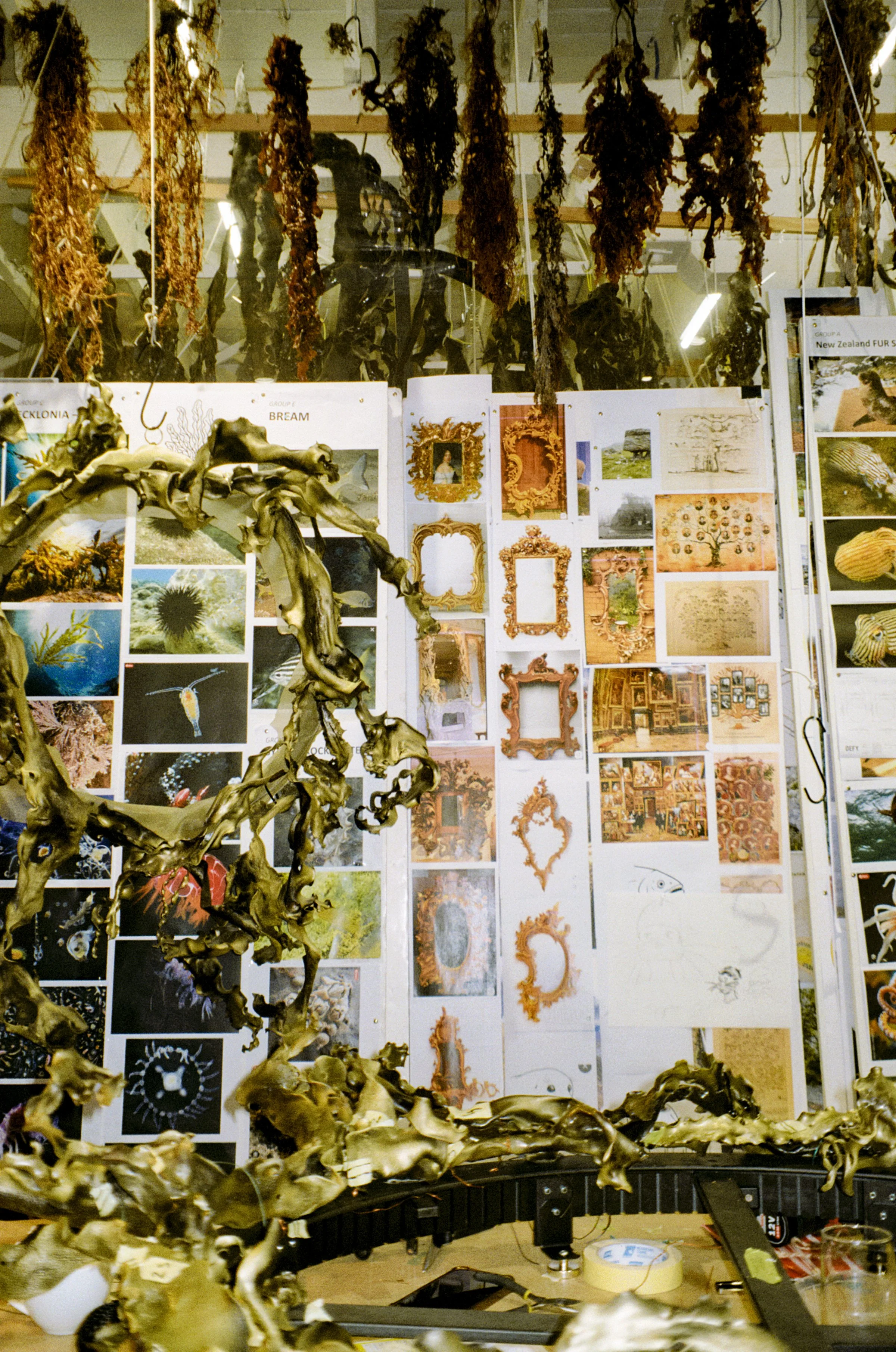
The design process to final form: Sea Kin
FINAL THOUGHTS
What first appeared as a studio bursting with dried seaweed later revealed itself as something much more alive, a lasting impression Turpin aims to capture in all her work. The energy I felt upon entering her studio had transformed into a deeper appreciation for nature’s rhythms and movements as we discussed how her work responds to these themes. Whether it’s the changing light throughout the day, growth over years, or the turning tides, Turpin invites us to slow down, look closer and appreciate nature’s energy. Through this appreciation, she fosters the empathy and hope that might inspire us to make a positive change.